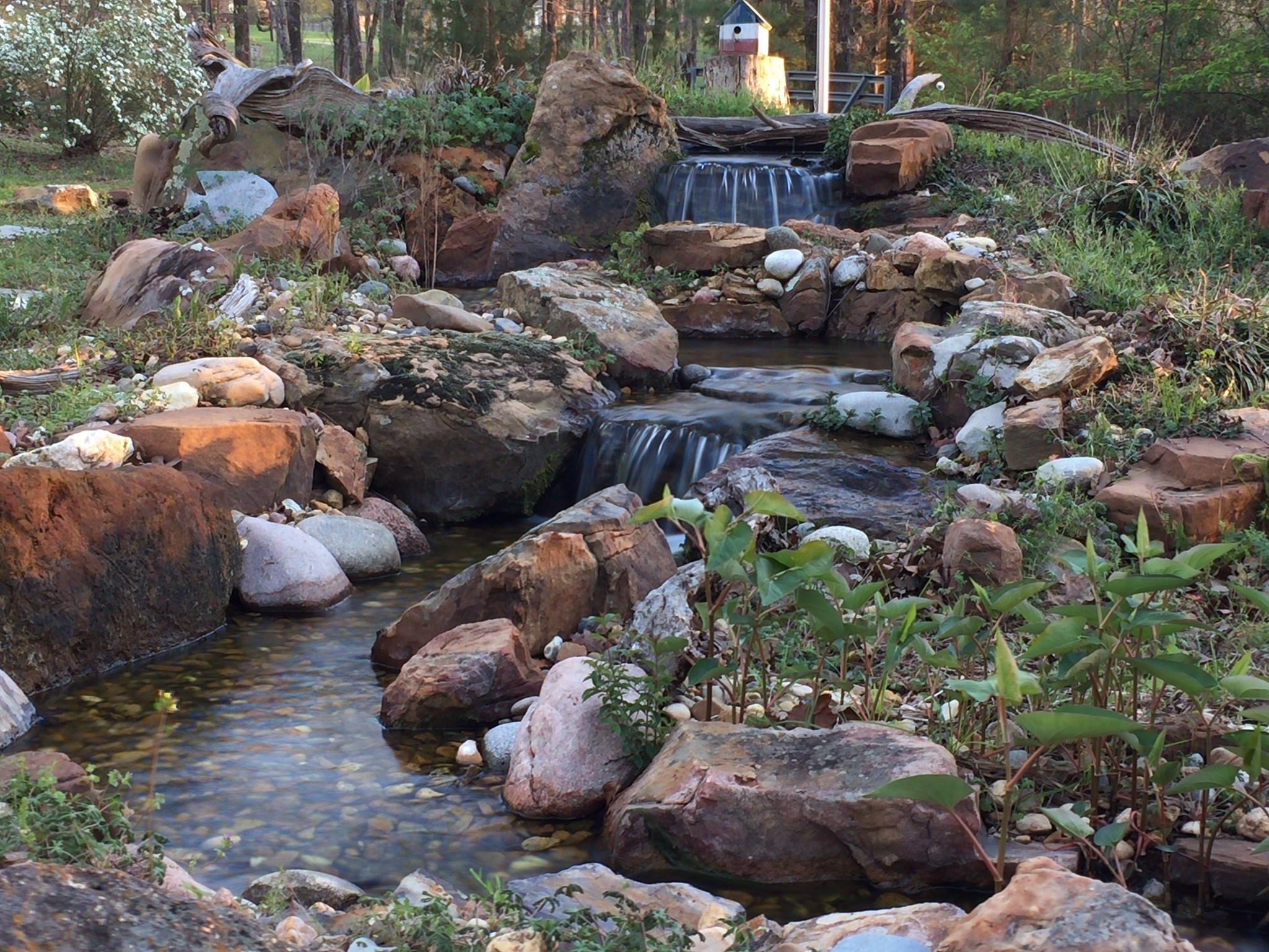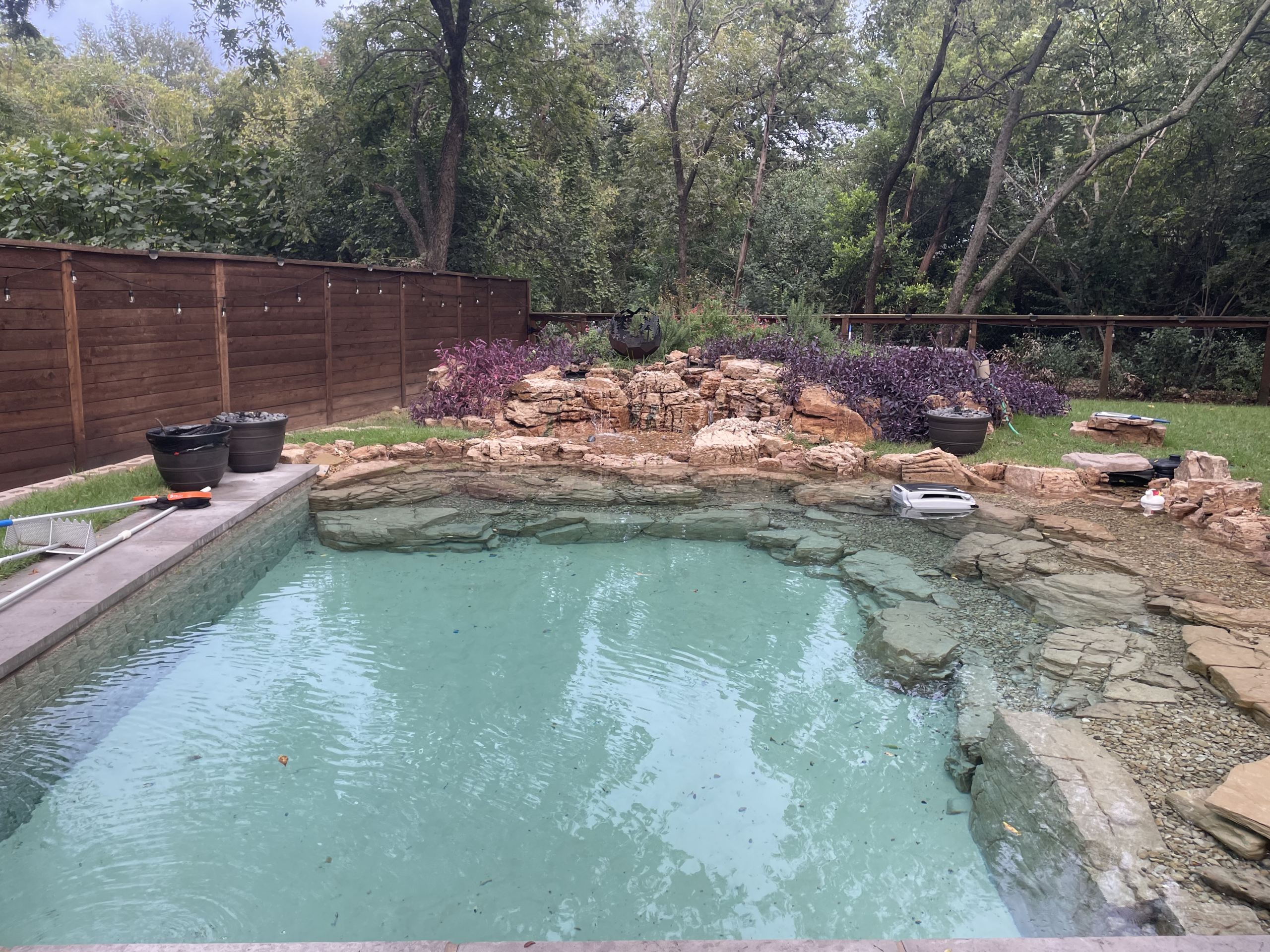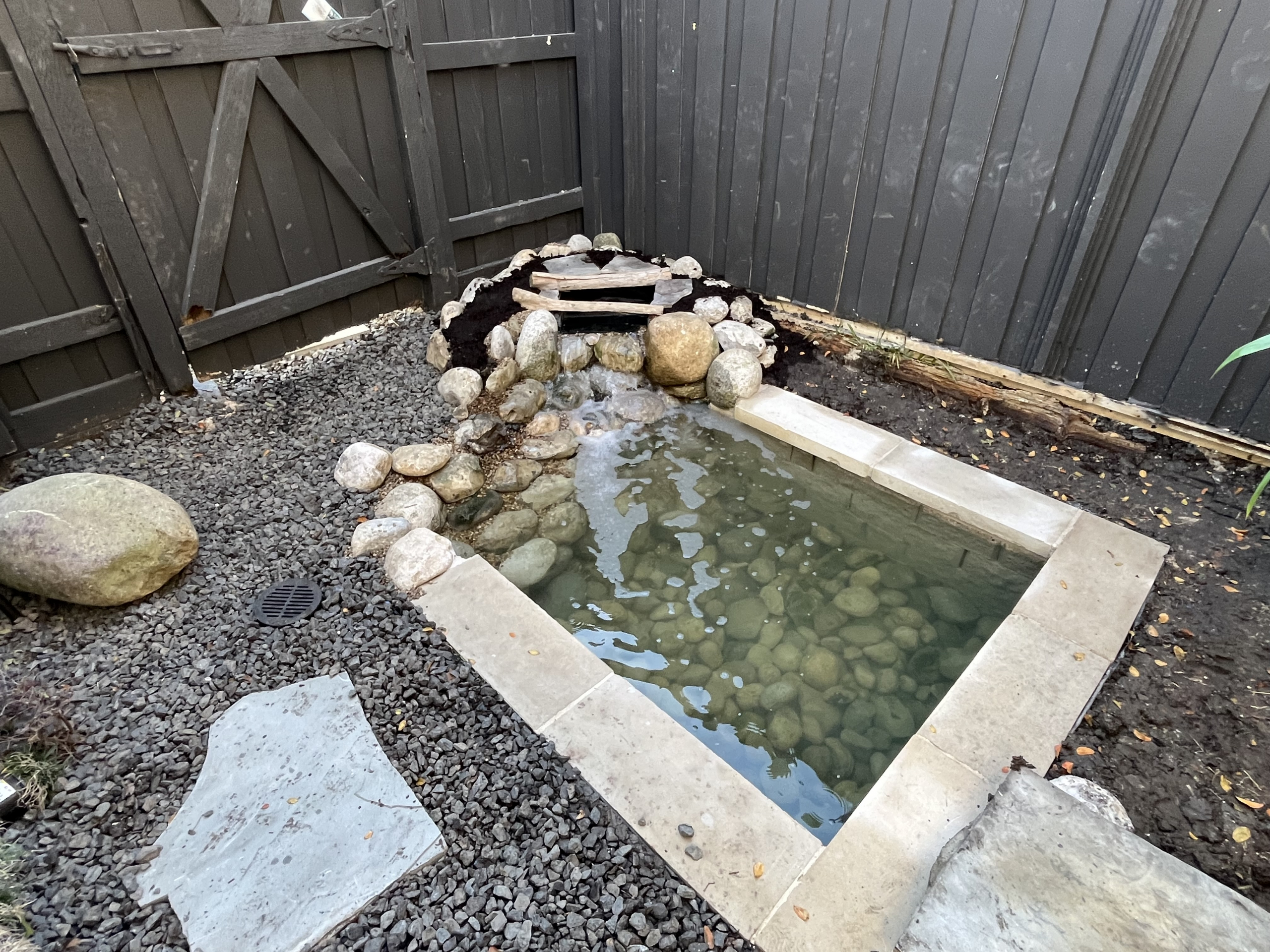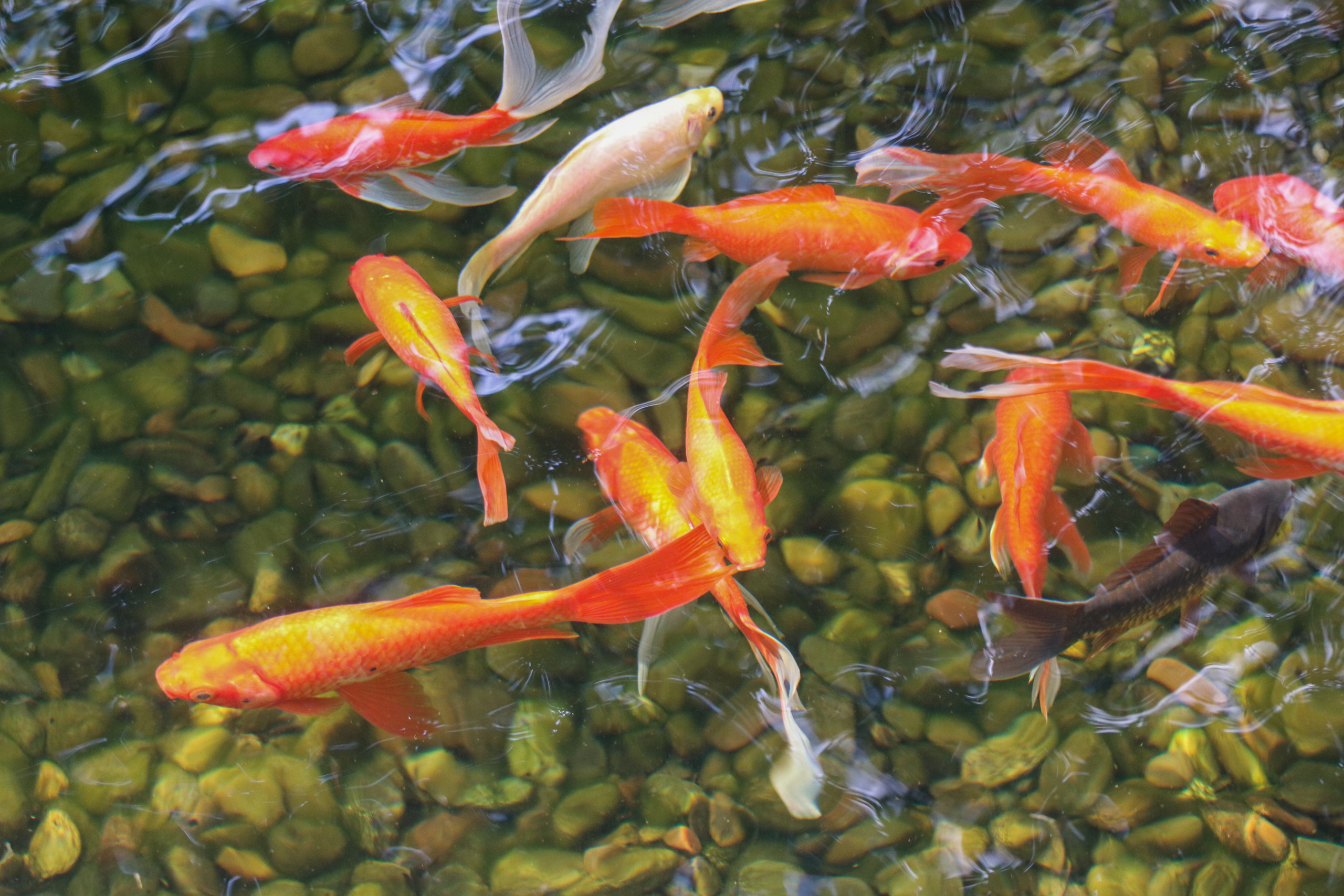


A backyard pond can be one of the best places to relax during summer. Waterlilies bloom, koi swim through the water, and the sound of a waterfall can make even a hot day feel more peaceful.
Summer in North Texas can be hard on a pond, though. Long periods of heat, strong sunshine, dry weather, and sudden storms can all affect the water. Pond temperatures may rise quickly, and water can disappear faster than expected.
Warm water also holds less oxygen than cool water. At the same time, active fish and helpful pond bacteria need plenty of oxygen. Algae may grow faster, and old leaves or fish waste can break down more quickly.
The good news is that North Texas summer pond care does not have to be hard. These six simple steps can help keep your pond clear, balanced, and ready to enjoy.
Keep the Water Moving
Water movement is very important during a Texas summer.
A waterfall or stream does more than add beauty to your yard. As water moves and splashes over rocks, it picks up oxygen. This oxygen supports your fish and the helpful bacteria that keep the pond balanced.
Check your waterfall each day to make sure the flow looks normal. A slower waterfall may mean that something is blocking the system.
Common causes of poor water flow include:
- A full skimmer basket
- A dirty filter pad
- Leaves near the pump
- String algae around the intake
- A low pond water level
Clean away anything that is blocking the water. Good circulation helps carry debris toward the skimmer and prevents warm, still areas from forming.
A pond aerator can also be very helpful during long stretches of heat. It sends bubbles through the water and brings deeper water toward the surface.
Aeration is especially helpful at night. Plants make oxygen during the day, but they use oxygen after sunset. Oxygen levels are often lowest early in the morning.
Running an aerator day and night can give fish extra support during the hottest weeks of summer.
Watch Your Fish for Signs of Trouble
Fish often show signs of a pond problem before the water looks different.
Take a few minutes each day to watch your koi or goldfish. Healthy fish should swim normally and respond when you walk near the pond.
Watch for signs such as:
- Gasping at the surface
- Gathering near the waterfall
- Staying close to the aerator
- Swimming slowly
- Hiding more than usual
- Rubbing against rocks
- Losing interest in food
Fish gathering near the waterfall may be searching for more oxygen. Gasping near the surface can also mean that oxygen levels are too low.
Check your pump, waterfall, and aerator right away. Make sure the water is moving and the filter is not blocked.
Hot water can place stress on fish. Stressed fish may be more likely to become sick, especially when poor water quality or too much waste is also present.
Watching your fish is one of the easiest parts of North Texas summer pond care. Catching a change early can prevent a small problem from becoming a larger one.
Provide Shade During the Hottest Part of the Day
North Texas sunshine can heat pond water quickly, especially during July and August.
Aquatic plants are a natural way to create shade. Waterlilies and floating plants spread across the surface and block some sunlight from reaching the water.
Try to cover about one-third to one-half of the pond’s surface with plant leaves during summer.
Good choices may include:
- Hardy or tropical waterlilies
- Water lettuce
- Water hyacinth
- Mosaic plant
- Lotus in larger ponds
Shade helps keep the water cooler and gives fish a comfortable place to rest. Plant leaves also protect fish from birds and other animals.
Aquatic plants use nutrients from the water, too. This means fewer nutrients may be left for algae.
A nearby tree, pergola, patio cover, or shade sail can also help. Just be careful with trees that drop many leaves, flowers, or seeds into the pond.
Do not let floating plants cover the entire surface. Leave open water around the skimmer, waterfall, and aerator so water and oxygen can move freely.
Check the Water Level Often
Hot temperatures, dry air, and wind can cause pond water to disappear quickly.
Waterfalls and streams also add to normal evaporation because they expose more water to the air. A pond may lose much more water during a hot, windy week than it does during mild weather.
Check the water level several times each week. Make sure it stays high enough for the skimmer and pump to work correctly.
When the water gets too low, the pump may pull in air. This can reduce the flow or damage the pump. A low water level may also cause the pond to warm faster.
Add water slowly when needed. Most city water contains chlorine or chloramine. These chemicals can harm fish and the helpful bacteria in your pond.
Use a pond-safe water treatment when adding a larger amount of tap water.
Some daily water loss is normal during summer. A sudden drop may point to a leak. If the pond loses several inches overnight, it is a good idea to have it checked.
North Texas storms can also change the pond level quickly. After heavy rain, check for washed-in mulch, soil, fertilizer, or other yard debris.
Remove Debris Before It Breaks Down
Warm water causes leaves, flowers, fish waste, and other debris to break down faster.
As this material decays, it releases nutrients into the water. These nutrients can feed algae and make the pond look green or cloudy.
Decaying material also uses oxygen. That can create extra stress during hot weather when oxygen levels are already lower.
Empty your skimmer basket before it becomes packed. Use a pond net to remove floating leaves and other debris.
Trim yellow leaves, old flowers, and brown waterlily pads. Try not to let dead plant material sink to the bottom of the pond.
Rinse the skimmer pad when it becomes dirty or when the water flow begins to slow. Biological filter material should be rinsed gently with pond water instead of untreated tap water. Chlorine can harm the helpful bacteria living inside the filter.
Do not scrub every rock or remove all signs of natural growth. A light layer of algae on pond rocks is normal. Fish may even graze on it.
The goal is to remove extra waste without upsetting the pond’s natural balance.
Support the Whole Pond Ecosystem
A pond is healthiest when all its parts work together.
The pump moves the water. The skimmer catches leaves. The filter removes waste. Aquatic plants create shade and use extra nutrients. Helpful bacteria break down fish waste and old plant material.
If one part stops working well, the whole pond may begin to struggle.
A balanced summer pond should have:
- Strong water circulation
- Plenty of oxygen
- Working filtration
- Healthy aquatic plants
- Shade for fish
- Regular debris removal
- A healthy number of fish
Too many fish can create more waste than the pond’s filter can manage. This can lead to cloudy water, algae growth, and low oxygen.
Avoid adding several pond treatments at the same time when the water does not look right. Products may help in some cases, but they cannot replace proper filtration, circulation, and regular care.
Try to find the cause of the problem. Green water, for example, may come from too much sunlight, too many nutrients, poor filtration, or not enough plants.
Fixing the cause will give you a better and longer-lasting result.
Enjoy a Clear and Healthy Pond All Summer
Your backyard pond should be a place where you can relax with family and friends.
Keep the water moving, provide shade, check the water level, and remove old leaves before they decay. Watch your fish and respond quickly when their behavior changes.
These simple North Texas summer pond care steps can help prevent cloudy water, heavy algae growth, low oxygen, and other common warm-weather problems.
FncPonds helps homeowners throughout Dallas–Fort Worth care for ponds, koi ponds, waterfalls, and other backyard water features. If your pond keeps turning green, loses too much water, or does not seem balanced, professional help can find the cause and offer a lasting solution.
With the right care, your North Texas pond can stay healthy, clear, and beautiful all summer long.